The Most Stunning Cenotes Near Cancun That Aren't Full of Tourists
These gorgeous underwater swimming holes? Yet another reason to add the Yucatán to your bucket list.
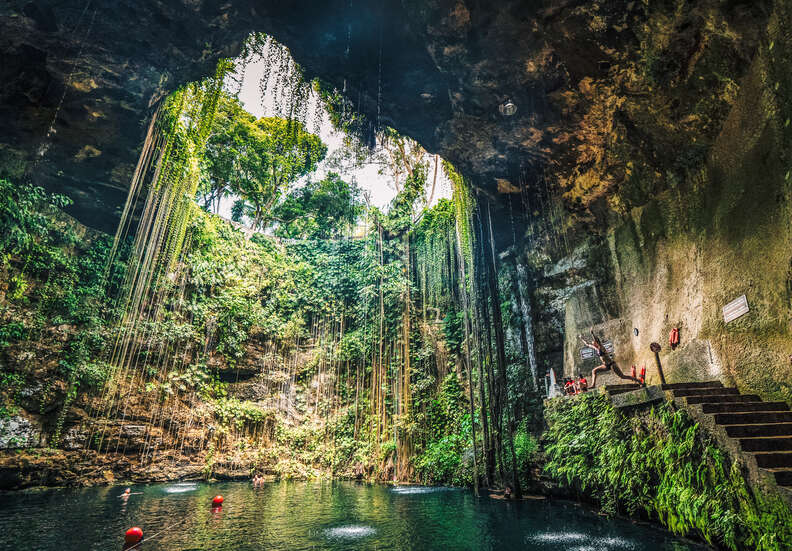
All around the Yucatán Peninsula, within easy reach of some of Mexico’s best vacation spots, visitors will find dreamy turquoise-hued swimming holes called cenotes. Derived from the Mayan word "ts'onot," the name roughly translates to “hole with water.” That’s a fairly literal description, but it doesn’t even begin to capture the magic of these brilliant swimming holes.
The underground caverns form when limestone caves in, leaving a sinkhole in the earth that fills with clear, vibrant blue water. Add a couple of dangling vines, some stairs or a swing, and a stalactite or two, and you’ve got an unforgettable setting for a dreamy afternoon swim. Ancient Mayans even believed that cenotes were entrances to the underworld, adding to the fascination with these bucket list-worthy spots.
The region is home to nearly 20,000 known cenotes, with most within a few hours drive of Cancun, Playa del Carmen, Tulum, or Merida. So while some destinations like Cenote Ik Kil and Cenote Hacienda Mucuyche are swamped with tourists and cost a pretty penny, many of the area’s swimming holes are natural playgrounds that are relatively accessible and inexpensive once you arrive.

Valladolid, Yucatán
Valladolid is a small Mexican town that boasts the country's only in-town cenote, a deep blue pool that sits in a half-collapsed cave just a few minutes' walk from the town center. A treasured part of Mexico’s indigenous culture, many cenotes are regulated by INAH (Instituto Nacional de Antropología e Historia), which protects archaeological and historically significant sites across the country. Tour operators, guides, and parks have to meet strict guidelines in order to allow visitors in. Still, some cenotes are located on private land, so their use isn’t regulated.
"Some see these systems as a sustainable source of income and have mechanisms to take care of them, but others do not," says Rodolfo Raigoza Figueras, the director of conservation for Grupo Xcaret, a group of ecological adventure theme parks near Playa del Carmen.

Valladolid, Yucatán
When you close your eyes and think of the perfect cenote, chances are you're thinking of Cenote Oxman—a bucket-list destination if ever we did see one. Not only does it have that idyllic turquoise-colored water, but the iridescent pool is also surrounded by soaring cave walls and punctuated with thick, hanging vines. Better yet, it has managed to evade the tour bus crowd surprisingly well, considering it’s so close to Valladolid and such a beautiful spot.

Akumal, Quintana Roo
There’s actually a vast, interconnected network of these underground rivers and cenotes throughout the Yucatán—many of which have yet to be discovered. Aktun Chen, located between Tulum and Playa del Carmen, is one of the most recent discoveries. A beautiful new eco-park allows visitors to swim in this underground river and offers ziplining and some dry caves to explore, too.

Puerto Morelos, Quintana Roo
Want your cenote without the side of crowds? Easy. Just find nine of your closest friends and book Cenote Elvira. For just $15 per person ($7.50 for kids ages 3-11), you can have this cenote all to yourself. Beyond all the typical cenote draws, you'll be hooked up with a bar and grill, hammocks, and even a waterfall for good measure. And the festivities do not have to be limited to the daylight hours. Elvira is decked out with lights so you can swim, swing, or sip well into the evening. While you're in the area, check out some of the other Puerto Morelos cenotes, a small Mexican fishing village that is one of the best-kept secrets when it comes to all things cenotes.
Tulum, Quintana Roo
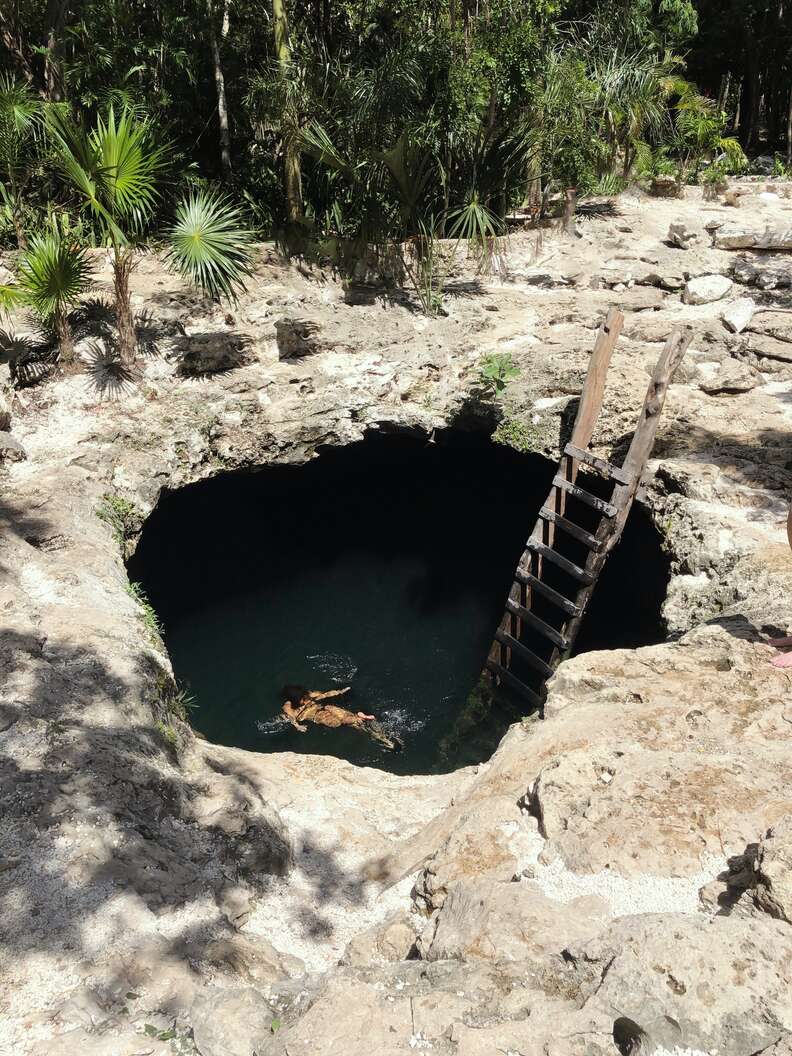
If you think you recognize Cenote Calavera, you're probably right. It's been plastered across social media, skyrocketing it to superstardom. It's not difficult to understand why—just look at it. It's gorgeous. It's basically everything you want from a cenote: turquoise water, steamy jungle, and stony perches for jumping. Cenote Calavera is pretty centrally located if you're staying in Tulum. You'll want to head towards the Coba Mayan Ruins, which are pretty spectacular and far less crowded than those in Tulum or Chichen Itza. If you can pry yourself off of the powdery beaches of Tulum, combining the ruins and the cenote makes for a really fantastic day of adventure.

Tulum, Quintana Roo
Because cenotes are part of a larger interconnected network, conservation efforts don’t begin and end at one specific site. "They are located within a basin that depends on the entire ecosystem to prevail, therefore their care depends on the conservation conditions of the entire Yucatán peninsula," says Raigoza.
Sac Actun is a prime example. This underground river and cave system is among the longest in Mexico, measuring nearly 260 miles long with a maximum depth of 300 feet. There are 111 cenote entrances along this route, but because of the fragility of the environment, there are only a few places where visitors can safely enter. The best way to explore Sac Atun is with a guide like Alltournative, a local company that helps preserve the delicacy of these pristine ecosystems.
Tulum, Quintana Roo
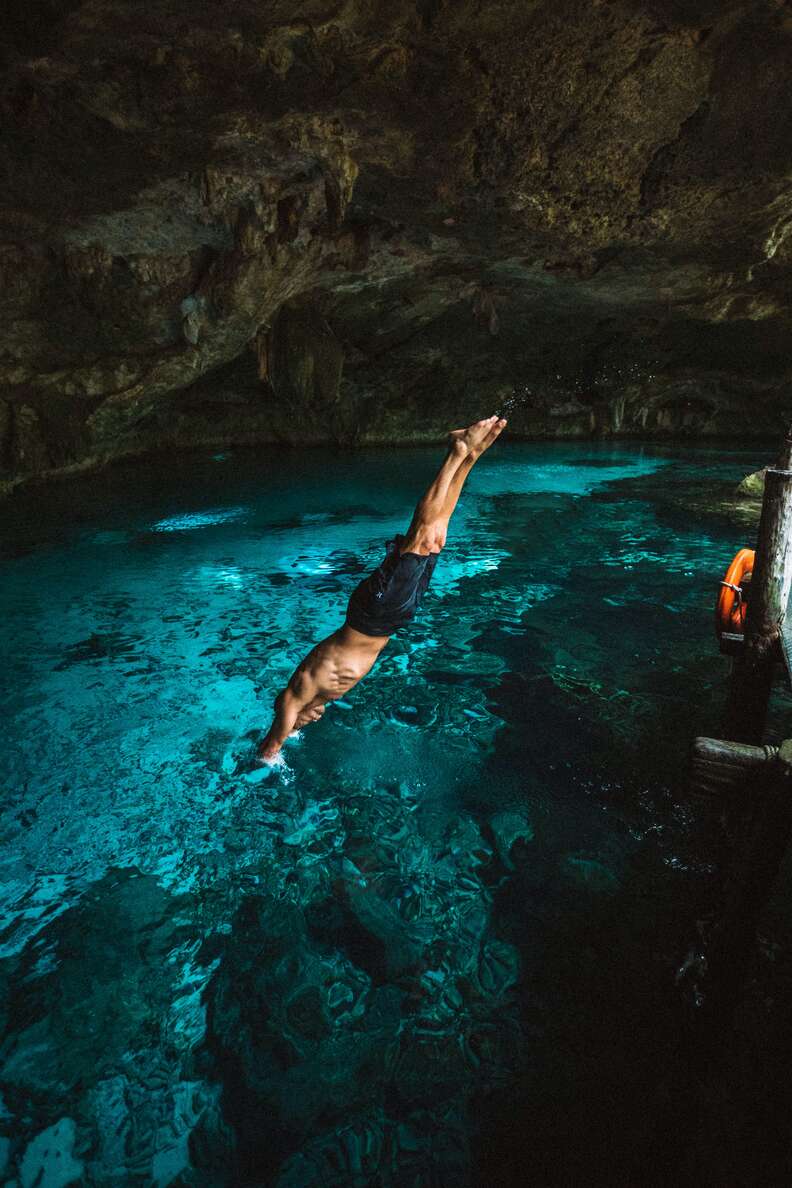
Dos Ojos, meaning “two eyes,” is far more than just two caves like the name implies. It’s actually a system of caverns that extends at least 38 miles, at a depth of over 350 feet. Fun fact: A link between Sac Actun and Dos Ojos was recently discovered, making them one of the longest underground systems in the world.
There are two main attractions here: the Blue Eye, a world-renowned diving destination where you can swim into a bat cave; and the Black Eye, an eerie, sensory-deprivation dive that offers almost no visibility and requires portable lights.

Valladolid, Yucatán
The only source of light in this cenote comes from a small hole in the roof, so ideal visiting hours are in the middle of the day. Sunlight beams down in an almost-heavenly glow; unfortunately, there'll be a ton of other people to bask in that glow with you, since this cenote is super popular. Nourishing tree roots hang from the ground above and almost touch the water at the bottom.
Homun, Yucatán
This tiny village about an hour outside Merida is home to about 20 cenotes. Visitors can hit each cenote on their own or let a friendly local show you around—you won’t be the only person hopping on a moto taxi and driving from swimming hole to swimming hole all afternoon. The area features all three types of cenote: open, semi-open, and closed, cave-like options. And since this is a village and not an overdone tourist town, many of the cenotes are located on farms or in locals’ backyards. Guides like Carlos with Cenotes de Homun curate the experience depending on how long you have and which types of cenote you want to see, and the price includes admission, a life jacket rental, and your ride to each spot.

Valladolid, Yucatán
The area known at Dzitnup has two of the region's top cenotes: the aforementioned X'keken and this one, which opened much more recently and is typically less crowded. It's still got the natural skylight in the roof, but the cave is also illuminated at night with purple lights, giving it a distinctive "club in a cave" feel.
As with wildlife tours and, well, basically any form of nature tourism, it’s important to do your research before signing on with a tour company. According to Roberto Rojo, the director of the SAYAB Planetarium of Playa del Carmen, responsible operators will limit tours to small groups, provide security for visitors, employ guides who will explain the significance and fragility of the cenotes, and use proper signage that encourages visitors to treat the environment with respect.

Tulum, Quintana Roo
Located right on the highway to Coba, this giant cenote is possibly the most-visited in the Yucatán. It’s sort of like a remote beach, inside an underground cave, with a white sandy shoreline that descends through gardens of tropical foliage… which might have something to do with its popularity. Snorkeling is big here, and swimmers come face to face with a rare triad: fish, turtles, and stalagmites.

Playa del Carmen, Quintana Roo
This is the coolest thing to do around Playa del Carmen, and that’s big talk for a place literally built for tourism. You’ll swim through underground caverns and tunnels that are millions of years old, where every inch of limestone protrudes with trippy stalactites and stalagmites. The turquoise water sparkles under unobtrusive lighting, but guides will give you a temporary thrill by cutting the lights, allowing you to float in the inky black—a surreal experience not to be missed.