
A Food- and Drink-Fueled Road Trip from LA to Big Sur
Everything to eat and drink as you drive from Central Coast wine country to the redwoods

One of the best things about LA is how easy it is to get the hell out of it. That’s not to say I dislike the city—I deeply love it, warts and all—but there is an undeniable relief when you crest the Conejo Grade or slide through Cajon Pass, when the deep suburbs of the OC finally peter out at San Onofre, or even when crossing the accursed grapevine. LA is paradise, but there’s really nothing better than a road trip out of there.
Luckily, there are a ton of great places within a reasonable drive of LA. You can head south to San Diego, paradise’s broey little brother, or into the desert towards the great Southwest. You can go northeast to the wild Sierras, or to the yet wilder frontier of Las Vegas. But my favorite road trip from LA is northwest, through the Central Coast and up to Big Sur.
I went camping in Big Sur with a massive group of LA families every year growing up, and though I don’t make it as often anymore, it will always have a special place in my heart. It’s where I learned how to pitch a tent and build a fire, how to roll a burrito and how to roll a joint, what happens when you slam on the front brake on a bike at speed and what happens when you throw a wax-coated cardboard box on a roaring campfire after quiet hours.
Big Sur is full of adventurers and artists and weirdos (complimentary) drawn to the rugged blend of redwoods and rocky coves. It’s isolated and insular, especially so considering the eternal disrepair of the Pacific Coast Highway, which continues to leap off of the winding cliffs of the Santa Lucia Mountains and into the sea. The pavement’s doomed love affair with the water below has made it so you can no longer drive all the way through from south to north; the road is just too prone to collapse (I feel you, girl). Now Big Sur is a dead end, an endpoint to a journey and not a pass-through, which is both challenging for local businesses and metaphysically fitting.
The drive up from LA is its own special pleasure, a tour of the grand diversity of California from the beach cities and wine country to farmland and forests, and through rural communities and college towns. It’s the ideal road trip for gluttony—you’ll pass through some of the best farms and vineyards in the world, and right by some of the best restaurants in California—but all that is counterbalanced with gorgeous nature for hiking and biking.
Who am I: A native Angeleno, with more than a decade’s worth of bylines about food in LA and California. The main reason I travel is to eat and drink—that’s what brought me to Tokyo, Oaxaca, Brussels, Modena, the Yucatán, and more—but since my kids were born I now mostly travel by car around the West Coast. Which is all to say that I’ve spent a lot of time driving and eating along this route, and even more time thinking about eating along this route.

The soundtrack:
If it were up to me, I would recommend some jangly, laid-back West Coast garage rock to carry you through the breezy oak-dotted hills of the Central Coast. Artists like La Luz, Kurt Vile, Ty Segall, Thee Oh Sees, Cherry Glazerr, and Mamalarky hit the right blend of crunchy nonchalance for a loose, easygoing cruise. As you move into the redwoods around Big Sur, you may get the urge to roll into some classic rock or hippy hits—don’t fight it, it’s in the air up there. But since I was riding with two tyrannical toddlers, the only things coming out of my speakers were the big three kid soundtracks on rotation: Frozen, Encanto, and Moana, with occasional bursts of Cyndi Lauper’s classic “Girls Just Want to Have Fun,” which my daughter has recently discovered.
What to pack:
Whether it’s April or August, you will certainly want a jacket in Big Sur. The mornings are foggy and the evenings are cool year-round, which is a lovely change of pace in the summer. Hiking boots will probably come in handy, or at least a pair of shoes and socks that you don’t mind getting caked in dirt, either at a campground or at a rustic Paso Robles winery. And on a similar note, you’ll probably want a big refillable water bottle, for the aforementioned hiking and to keep your rinse cycle going between wineries.
The map:
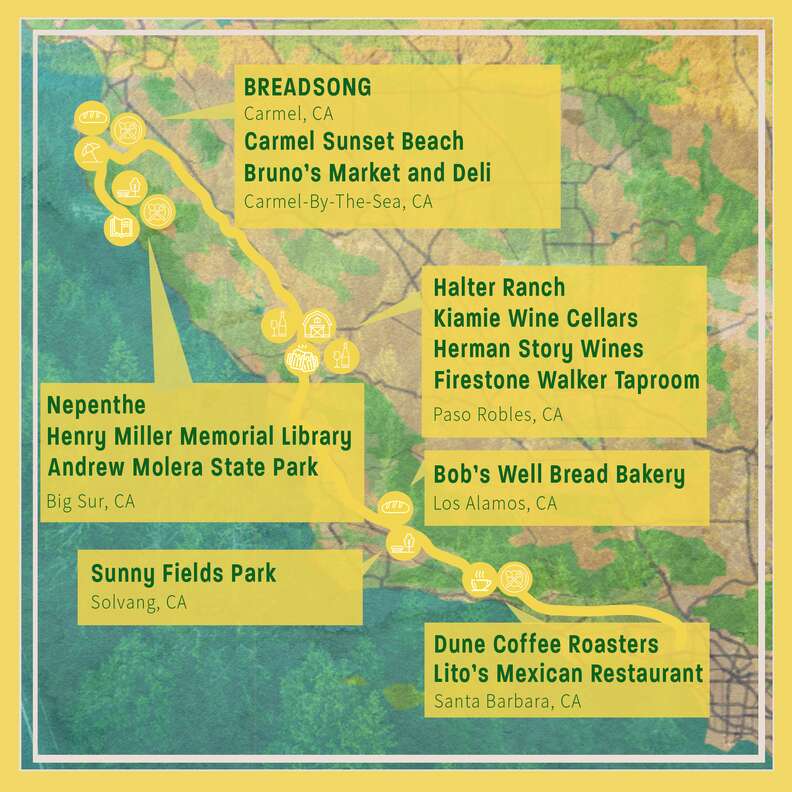
Day 1: LA to Paso Robles
Distance: 220 miles
If you’re the kind of person who likes to make a lot of stops on a road trip, this first leg might be the best drive on the West Coast. Heading north on the 101 freeway out of LA, you pass through the exurbs of the Conejo Valley and descend towards the uniquely agricultural beach towns of Oxnard and Ventura. If you need to get out already—maybe because of the traffic, or maybe because of a screaming child—there are great places to grab a quick bite just off the freeway in Ventura. Check out Prospect or Cajé for coffee, or Carnitas El Rey or Spencer Makenzie’s for tacos.
In an ideal world, though, you’d push on another hour or so, into California’s Riviera, Santa Barbara. This town presents too many great places to list, from legendary taquerias to stylish wine tasting rooms, but since we set out fairly early and arrived in Santa Barbara mid-morning, we hit two essential stops: Lito’s for breakfast, and Dune for coffee. Lito’s is a casual taqueria with an outstanding breakfast burrito, a massive thing that you can customize with a variety of fillings, but my go-to is the simple eggs, beans, potato, and cheese with an added Anaheim chili. Just around the corner is Dune Coffee Roasters, where the espresso drinks are always on point and the brewed coffee is a thing of beauty—as befits the home shop of Kay Cheon, the 2025 U.S. Barista Champion.

Take This Home
Continue north over Highway 154, the hypotenuse of the right triangle made by the 101’s sharp bend in Gaviota. It’s a windier road and speed limits are lower, but it’s also more direct and scenic, taking you through the heart of Santa Barbara wine country. Pop over to Bob’s Well Bread in Ballard, a bakery that’s justifiably legendary for sourdough loaves, sandwiches, and pastries of all kinds.
Stretch your legs:
Sunny Fields Park in Solvang has, as the name implies, a vast expanse of grass with very limited shade. But that’s not the reason to visit—come for the fairytale playground, complete with parapets, little wood cabins, and a distinctly nonfunctional windmill. Lay out a blanket or grab a picnic table to eat the kouign-amann and pistachio croissant you picked up at Bob’s Well Bread while the kids wear themselves out, and hopefully nap for the last leg of today’s drive.

It’s just another 90 minutes up to Paso Robles, and you should definitely make a point of visiting a winery or two (after you assign a designated driver). Up in the hills on the west side of town, Tablas Creek is a local legend, credited with introducing many of today’s most popular Rhone varietals to Paso Robles in the 1990s. Nearby Halter Ranch is what you imagine when you picture California wine country—a stunning modern estate perched atop a hill, crowded with wine moms polishing off the dregs of a bottle or four after last call. If you’re looking for something a little more rustic, don’t miss Kiamie Cellars, which is thoroughly underappreciated for their outstanding wines, and also for the ragtag crew of dogs and goats. Each of the above is family-friendly, but Kiamie is particularly so—if your kids are cool they may even get to feed furry kids (the baby goats) at Kiamie.
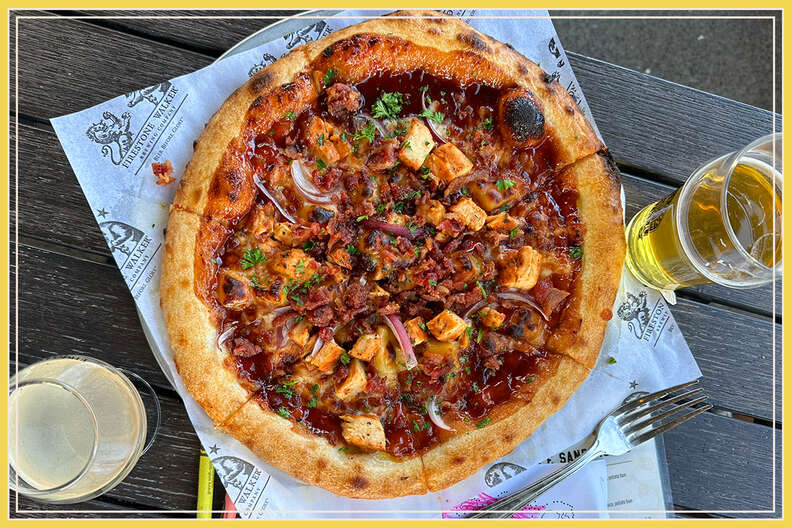
When wineries start to shutter, that means it’s time to head back into town for dinner—and maybe time to switch to beer. Firestone-Walker Brewing Company has a massive taproom and a solid pub menu of pizzas and burgers. It also happens to be a good place to watch sports, like perhaps the merciless elimination of my beloved LA Clippers at the hands of the hugest horseman, Nikola Jokic, and his Denver Nuggets. Sneak up the street to Finca for one more well-earned treat, a wood-grilled taco or a ceviche tostada, and a not-so-late nightcap, then head to the hotel.

Where to Stay

Day 2: Paso Robles to Big Sur
Distance: 140 miles
Start your day with coffee and a pastry from Spearhead Coffee in Paso Robles and hit the road. The first stretch of this drive is a lovely but long haul through farm country.
Worth the detour:
If you have a little extra time, take a few minutes to stop in Salinas before making the jog over Highway 68 down towards the coast. There’s a cute stretch of shops and restaurants in Old Town, legendary miniature burritos in top-tier flour tortillas at El Charrito, and the National Steinbeck Center if you want a little cultural enrichment.
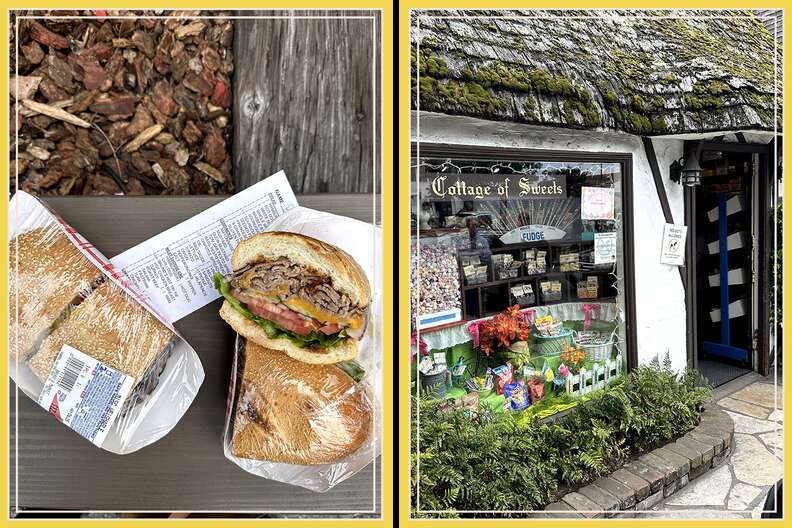
Thankfully it’s not too far to your next stop, the almost painfully charming Carmel-by-the-Sea. The small town is a major tourist destination, and it’s easy to understand why—it’s gorgeous, with luxurious homes nestled between pines and the Pacific, and a quaint main street lined in equal parts with high-end boutiques, touristy shops, and art galleries. There are Michelin-starred meals to be had here, but they don’t really fit the road trip aesthetic we’re trying to cultivate; head instead to Bruno’s Market & Deli, a small grocery store on the edge of the action where they specialize in grilled tri-tip sandwiches. Eat in nearby Devendorf Park, take a stroll down to iconic candy store Cottage of Sweets then walk back up Ocean Avenue to Alvarado Street Brewery, where there's something particularly useful for a couple days in Big Sur—a cooler full of outstanding craft beers.
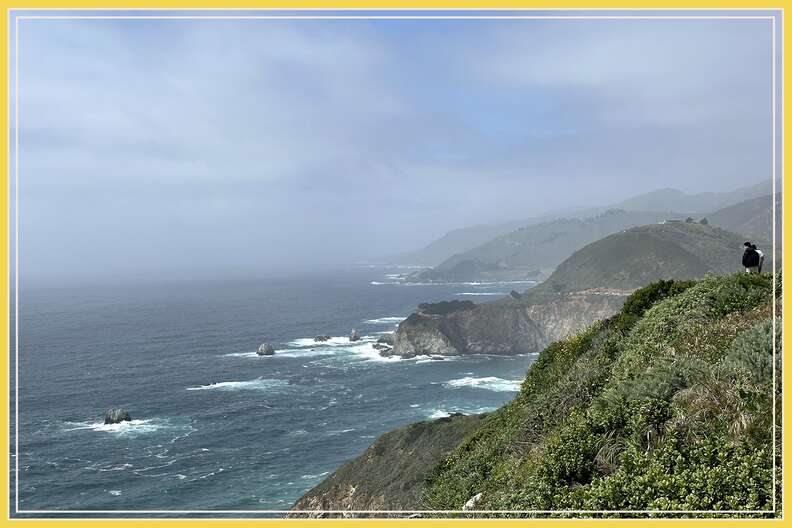
The drive south on PCH from Carmel to Big Sur is breathtaking—it cannot be overstated how gorgeous it is to cruise the winding curves on the edge of a cliff overlooking the Pacific Ocean. But if you’re driving, it doesn’t afford much opportunity to take a look. Thankfully, there are lots of cliffside turnouts where you can pull over and take it all in.
Stretch your legs:
Pull over at the Soberanes Canyon Trailhead, where the trails cross to both sides of the highway: one 2.8-mile out-and-back hike turns up the mountains for wildflowers, streams, and big views; and the other is a quick, mostly flat mile or so that winds its way along the bluffs overlooking the rocky coves of Painter’s Point and Garrapata State Park. Make sure to take a deep breath, too—there may be no better smell than the combination of California coastal shrubs and salty Pacific air.
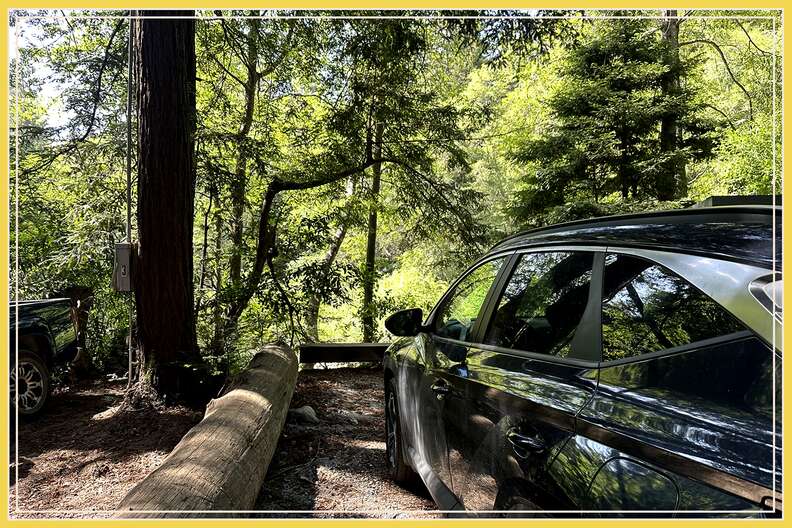
From Soberanes Canyon it’s another 20 minutes or so into Big Sur proper. Enjoy the last few cliffside twists and turns as the road bends inland a bit, turning to weave through the epic redwoods. Check in to your hotel or cabin, or pitch your tent at your campsite (more on this in a minute), and get ready for dinner.
When the Big Sur Bakery tragically burned down in a fire in 2024, the area lost perhaps its best restaurant, but fortunately it has a spiritual successor in Solstice, a year-old restaurant that’s part of a growing collection of businesses called The Village. Solstice is elegant but not stuffy, with a concise menu and a focus on local produce cooked in a wood-burning hearth. There’s a four-course tasting menu, but you’d do just fine with a few of their creative small plates, like a cold-smoked avocado layered with seeds, greens, and a tomato-infused miso or the crudo (when I went, it was halibut dressed with blackberries, artichoke hearts, and basil).
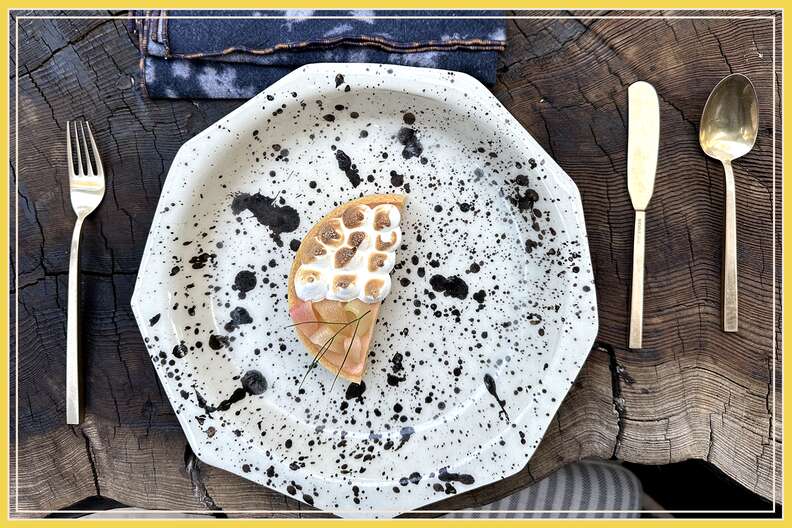
Desserts are particularly lovely, and drinks like the wild onion martini are similarly outstanding, creative without crossing over into fussiness—unlike my children, who squawked and squirmed through the entire meal. Thankfully, there’s a pretty patch of grass just behind the patio where they could take little breaks to chase each other in tight circles. Fine dining is never easy with kids, but Solstice makes it as smooth as it could possibly be.
After dinner, head back to the cabin, crack one of those Alvarado Street IPAs, and teach your kids how to build a fire in a rusty, ash-caked, iconic iron fire pit.

Where To Stay

If you have three days…
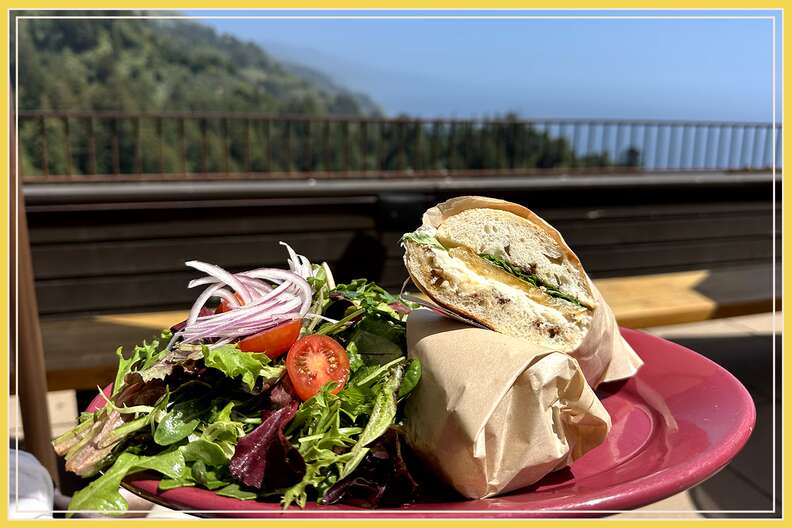
Spend a day in Big Sur, splash in the river, maybe drive up to Andrew Molera State Park for a hike to the beach or along the bluffs. Whether you’re staying in the park or not, dip into the Big Sur Lodge for tea, ice cream, and a souvenir. The restaurant Nepenthe is the most famous in Big Sur, perched on the edge of a cliff with one of the best views anywhere—but don’t go for dinner. Dinner is fine, but it’s not any better than that, and it’s quite expensive for what it is; you’re clearly paying to gaze out over the ocean. And that goal is actually better accomplished during the day anyway, when the adjoining and affiliated Cafe Kevah serves simple sandwiches, salads, and quality coffee drinks with the same view and no hassle. If sunset is important to you, though, you can also drop by Nepenthe proper for a drink and a snack.
If you have four days…
Take a drive down the narrow forest road to Pfeiffer Beach for a windswept walk along the coast. You can get in the water if you want—and there’s a good surf break if that’s your thing—but it’s cold as hell, and the current is quite strong, so it’s not ideal for splashing in the waves. If you’d like an easy stroll to a rewarding view, pop down to McWay Falls, which you can see cascading into a sandy cove after a flat 10-minute walk from the parking lot. The Henry Miller Library is a beautiful space where the author lived in the 1960s; it’s now a museum and a shop, and they also host some truly epic concerts, including past shows from the likes of André 3000, Animal Collective, The Flaming Lips, and Pixies.
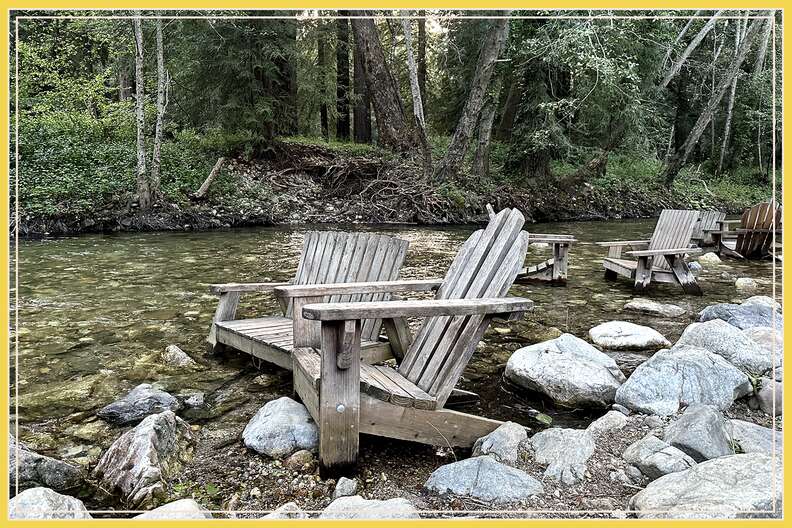
For an early dinner, head over to the Big Sur River Inn, a classic bar, restaurant, and motel that occupies the short slope between the highway and the river itself. Before settling on the back patio for dinner, where you can look down at the river and then up at the redwoods, order a beer from their frequently-rotating but consistently good tap list and walk the path down to the river—there are a dozen or so adirondack chairs set up right in the water, so you can have a drink with your feet in the river, one of life’s purest pleasures. And if it’s warm or you’re feeling particularly brave, like my friend’s dad Dave was after a few rounds of drinks in 2002, maybe challenge a kid to a handstand contest in the river, and see who can hold on to the rocky bottom the longest in the frigid current. Back then, there were no winners—nobody could actually do a handstand in the river for more than a moment. But maybe you’ll have better luck.