
On the Hunt for Billionaire Barnacles, as Grotesque as They Are Rare
Also known as percebes or goose barnacles, this highly expensive delicacy largely harvested off the coast of Portugal may soon be on a menu near you.
To dig into a goose barnacle—those two inch-long crustaceans that look like dinosaur claws but taste exquisitely, confoundingly, like the sea—I pinch the section where the leathery skin meets the “claw” (which is actually the shell), and gently pull, careful to protect my eyes. This is important—they tend to squirt.
It’s my first goose barnacle, and I’m trying it at the cliffside hut of fisherman Rogério Leitão, on Portugal’s Berlenga Grande island. Despite being with a barnacle professional, I’m wary. Goose barnacles, or percebes, are alien-like and objectively grotesque; medieval naturalists believed they were tiny goose eggs and named them accordingly. Also known as billionaire’s barnacles or Lucifer’s Fingers, they cling to hard-to-reach intertidal zones on cliffsides and rocky outcrops, relentlessly thrashed by waves, making them incredibly difficult—and dangerous—to harvest.
But one bite of the peach-colored muscle—a delicate cross between lobster and clam that belies its rough exterior— makes it immediately clear why when celebrities like David Beckham order a plate, it’s newsworthy. Or why driftwood that washes up in Wales blanketed in them is valued at $65,000.
Although these bizarre, stubborn shellfish are both displeasing to the untrained eye and dangerous to harvest, their reverence and evangelism by top chefs are gaining them notoriety beyond Europe. With prices reaching up to $500 per pound, goose barnacles are a delicacy steeped in tradition, culture, and a thrill of danger—one that’s now capturing the attention of global gourmands.

Leitão is one of just 11 fishermen with permission to live on Berlenga Grande, the only visitable island of three in the archipelago that makes up Berlengas Natural Reserve.
These isles once hosted the Romans and the Phoenicians, and later Portuguese explorers. In the fifteenth century, the archipelago first became protected when Portuguese royalty were interested in using it for rabbit hunting. Today, daytrippers come to the Berlengas as an alternative to Portugal’s more popular beaches, as well as for natural hiking, wild swimming, and snorkeling in the surrounding reef. (A daily cap of 550 people helps preserve the ecosystem.)
But it’s what’s beneath the water that also brings me here with Pedro Pena Bastos, chef of the Michelin-starred restaurant Cura in Lisbon, and some of his staff. The Berlengas islands are not only a natural reserve, but a natural fishery and a significant source of seafood for the restaurant. The seafood of the Berlengas are so sought-after they don’t even make it to the open market, but head directly to suppliers.
The bounty the restaurant procures from this reserve is endless, and includes John Dory, sea bass, and octopus. But the highlight of the haul are goose barnacles. “The sea here is very special, with a lot of north Atlantic currents, which allows the fish to grow because of the temperature of the water,” says Bastos. “The best quality barnacles are in this region.”
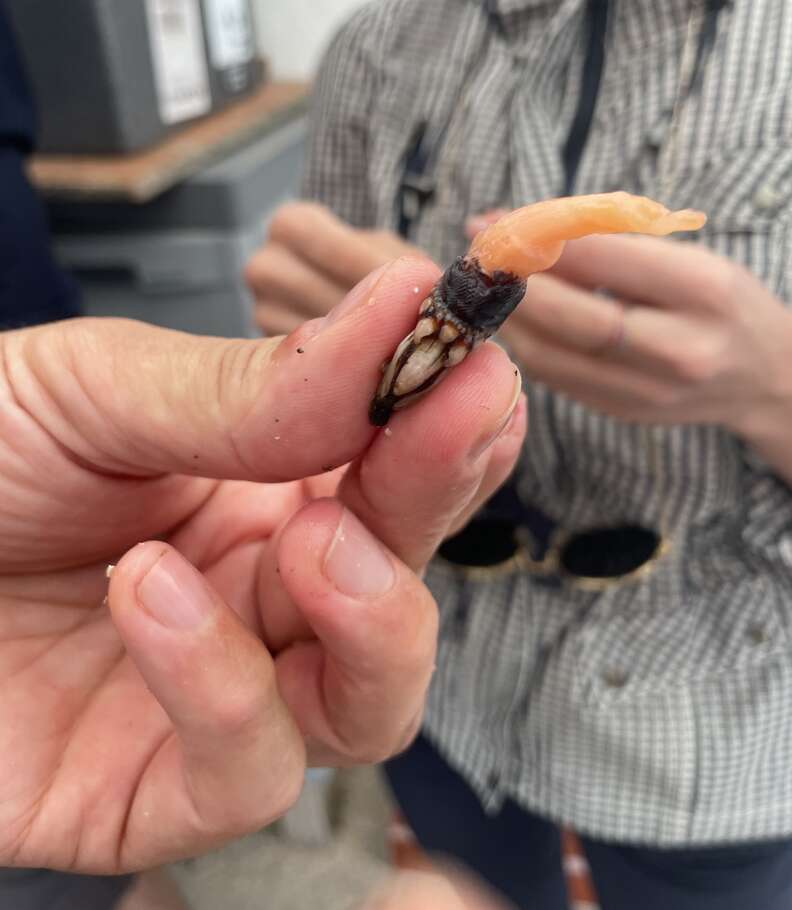
In Leitão’s hut, looking at the bowl of steaming claws on the table, you have to use your imagination to gather why these barnacles are so sought after—and why their fame is only growing internationally. But chef-owner Alex Raij of Saint Julivert Fisherie and Txikito in New York has a suggestion. “People like us have created awareness and familiarity of the delicacy,” she says. “It’s one of those things no one outside Spain really cared about until recently, but we have always served when we could to foster curiosity.”
Goose barnacles are some of the most expensive seafoods in the world, fetching up to $500 a pound in the more dangerous zones. And the conditions needed to grow them cannot be replicated in a fishery. Prices, like any seafood, are impacted by supply and demand, plus inflation. As of the publishing of this article, goose barnacles start at $115 for two pounds from the Portland, Maine-based Browne Trading Co., which sources them from Portugal’s Iberian Peninsula. Similarly for Cura, Bastos has paid up to 100 euro ($110) a kilo.
Raij’s restaurants have never made money on goose barnacles, but for her, that’s not the point. “Our restaurants serve them because they reflect part of our personal history and our desire to share stories around landscapes that define our cooking journey,” she says. “In the case of percebes, they’re a delicacy that people risk their lives to procure, and harvesting them is a skill that is passed on from generation to another. We want to support these traditions being preserved.”

A sea to table endeavor
Leitão’s January to September seasonal fishing home consists of two rooms: a small front kitchen and a back bedroom with two bunks and a television. I watch as he empties a bucket of fresh barnacles into a pot of boiling salted water. He waits 30 seconds, then strains and transfers them to a tray, which he plops onto an outdoor table overlooking the deep blue water. Finally, he fills our beer glasses with Portuguese white wine.
Harvesting goose barnacles is treacherous, and takes brute strength. The sea is rough, the terrain can be slippery, and the tides can turn at a moment’s notice. Even on calm days the job is frightening. The shores of northwestern Spain where goose barnacles grow is even called Costa da Morte, or “Coast of Death”.
Every year, an average of five percebeiros die trying to scrape these high-priced crustaceans off the rocks on parts of the Spanish and Portuguese coasts. Today, at 11 am, it’s already been a long day for Leitão. Earlier this morning, at 1 am, he gathered the meal before us. When the moon was out he pulled on a wetsuit and hiked down the hills of the island to where the ocean clashed into its rocky façade. There, he harvested the goose barnacles at low tide, where the white shells glowed in the moonlight.

Back to the mainland
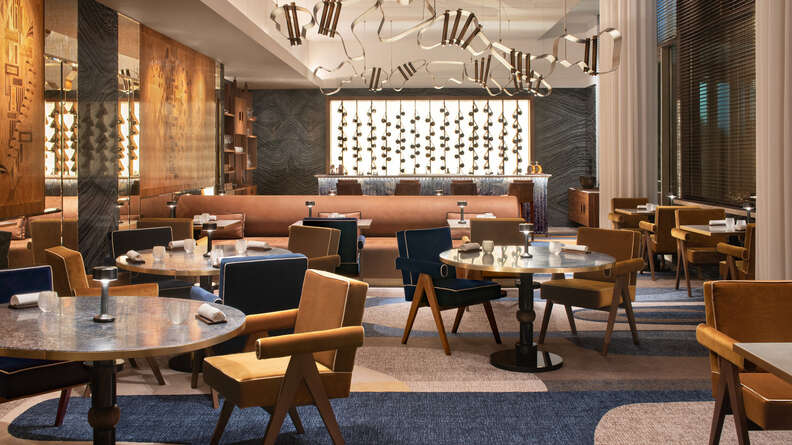
At night, back on the mainland, I dine at Cura, a restaurant located in the Four Seasons Hotel Ritz Lisbon that’s known for turning Portuguese cuisine on its head. Its gilded decor is a stark contrast to Leitão’s fisherman’s hut. The only similarity between the two is an open kitchen, allowing me to watch the chefs work their magic.
Each dish served boasts an artful presentation. Figs with beetroot are on a rustic handmade plate. Squid made to look like linguine and tinged with hazelnut and bergamot. The fish is fresh and changes daily. “When you can work local, you should work local,” says Bastos. “I think that’s important; you are stimulating the circular economy and all the people around the product.”
The goose barnacles are cut into thick inch-long stumps, heated with a glaze of fish bones and lemon juice, and served with sliced green beans. A piece of John Dory, also from the Berlengas reserve, is perched on top, and spooned over the barnacles is curry with spices from Goa, a former Portuguese colony. The dish only comes as part of a tasting menu of ten dishes for 185 euro ($205).
It’s a much prettier version of the barnacles I had earlier that day, but I have to wonder if they’re worth the risks they pose to local fishermen and the exorbitant price—especially now that they’re becoming more sought after by restaurants in the US and around the world. But then I think back to earlier that day, eating barnacles on a cliff, seagulls circling above, deep blue sea below, as the ocean breeze washed the gnarled claws with extra salt.
As Raij says, goose barnacles feeds both those in search of delicious, hard-to-get, high-end luxury, and those who strive to preserve a way of life and culture.
Where to Find Percebes in Portugal
You’ll have the most luck finding the delicacy in seaside towns like Peniche. But percebes can also be found in the Time Out Market in Lisbon, and Cervejaria Ramiro which, helpfully, has pictures on the menu.